SUMAC 2026
The 8th workshop on analysis, understanding
and promotion of heritage contents
Advances in machine learning, signal processing,
multimodal techniques and human-machine interaction
In conjunction with ACM Multimedia 2026
10-14 November 2026, Rio de Janeiro, Brazil (On-Site)
News and Updates
- [16 Aug, 2026] Notifications released!
- [12 Jul, 2026] Paper submission deadline extended to July 23, 2026 (AoE)
- [13 May, 2026] Submission site is open!
- [26 Mar, 2026] Website Launched!
Overview
The eighth version of the SUMAC (analySis, Understanding and proMotion of heritAge Contents) workshop, like its predecessors, focuses on analyzing, processing and valorizing all types of data related to cultural heritage, including tangible and intangible heritage. As stated by UNESCO, cultural heritage provides societies with a wealth of resources inherited from the past, created in the present for the benefit of future generations.
Digital heritage data acquired are naturally massive and address a large diversity of monomodal modalities (text, structured referentials, image, video, 3D, music, sensor data). Their processing and promotion put into light several scientific challenges as well as various new use cases that are of topical interest today for the ACM Multimedia community, both for academics and industries. Like in the previous editions, we will strive to value the sharing of knowledge, algorithms and experiments; and also open source software and open data, by encouraging the submission of articles that promote this sharing policy.
Abundant heritage data is available in the most recent years. Older data, that can be called the big data of the past, are mostly locked -- they currently remain largely “hidden” from the public, in galleries, libraries, archives, museums or data producers' infrastructures. Processing heritage data to increase their visibility will act as a game changer and contribute to a large panel of communities, by enabling an outstanding pool of inter-operable data, not only as a service to citizens but also to public or private actors, by challenging the research methods at the crossing of computer science, artificial intelligence and digital humanities.
Call for Papers
The ambition of SUMAC is to bring together researchers and practitioners from different disciplines to share ideas and methods on current trends in the analysis, understanding and promotion of heritage contents. These challenges are reflected in the corresponding sub-fields of machine learning, signal processing, multi-modal techniques and human-machine interaction. We welcome research contributions for the following (but not limited to) topics:
- Monomodal analysis: image, text, video, 3D, music, sensor data and structured referentials
- Information retrieval for multimedia heritage
- Automated archaeology and heritage data processing
- Multi-modal deep learning and time series analysis for heritage data
- Heritage modeling, visualization, and virtualization
- Smart digitization and reconstruction of heritage data
- Open heritage data and bench-marking
The scope of targeted applications is extensive and includes:
- Analysis, archaeometry of artifacts
- Diagnosis and monitoring for restoration and preventive conservation
- Geosciences / Geomatics for cultural heritage
- Education
- Smart and sustainable tourism
- Urban planning
- Digital Twins
Important dates (AoE)
- Paper submission:
July 16July 23, 2026 - Author acceptance notification:
August 6August 10, 2026 - Camera-Ready: August 20, 2026
- Workshop date: Nov. 10-14, 2026 (TBD)
Submission guidelines
The submissions guidelines for SUMAC 2026 follow the rules of the main conference ACM Multimedia 2026, see here. In summary:
Submission format. All submissions must be original work not under review at any other workshop, conference, or journal. The workshop will accept papers describing completed work (full paper) as well as work in progress (short paper). Two submission formats are accepted:
- 8 pages plus up to 2-page reference (full paper).
- 4 pages plus 2-page reference (short paper);
Peer Review and publication. Paper submissions must conform with the “double-blind” review policy. All papers will be peer-reviewed by experts in the field, they will receive at least two reviews. Acceptance will be based on relevance to the workshop, scientific novelty, and technical quality. Depending on the number, maturity and topics of the accepted submissions, the work will be presented via oral or poster sessions. The workshop papers will be published as Open Access articles.
Profile Registration. A registered profile at OpenReview (submissions' portal) is required to submit a paper.
IMP NOTES:
- New profiles created without an institutional email will go through a moderation process that can take up to two weeks.
- New profiles created with an institutional email will be activated automatically.
Submissions' Site https://openreview.net/group?id=acmmm.org/ACMMM/2026/Workshop/SUMAC
Special Highlights
Best Paper Award - We will present a best paper award, accompanied with a certificate and a trophy, similar to previous editions.
Keynote Speakers

Dr.
Alasdair Newson
Sorbonne University, France
Website
Alasdair Newson is a lecturer (associate professor) at the ISIR (Institut des Systèmes Intelligents et de Robotique) of Sorbonne Université (France), since 2023. He received his PhD from Télécom Paris (France) in 2014. From 2018 to 2023, he was assistant professor at Télécom Paris. His research interests include image and video restoration, editing and analysis, and the study of generative models for these purposes.
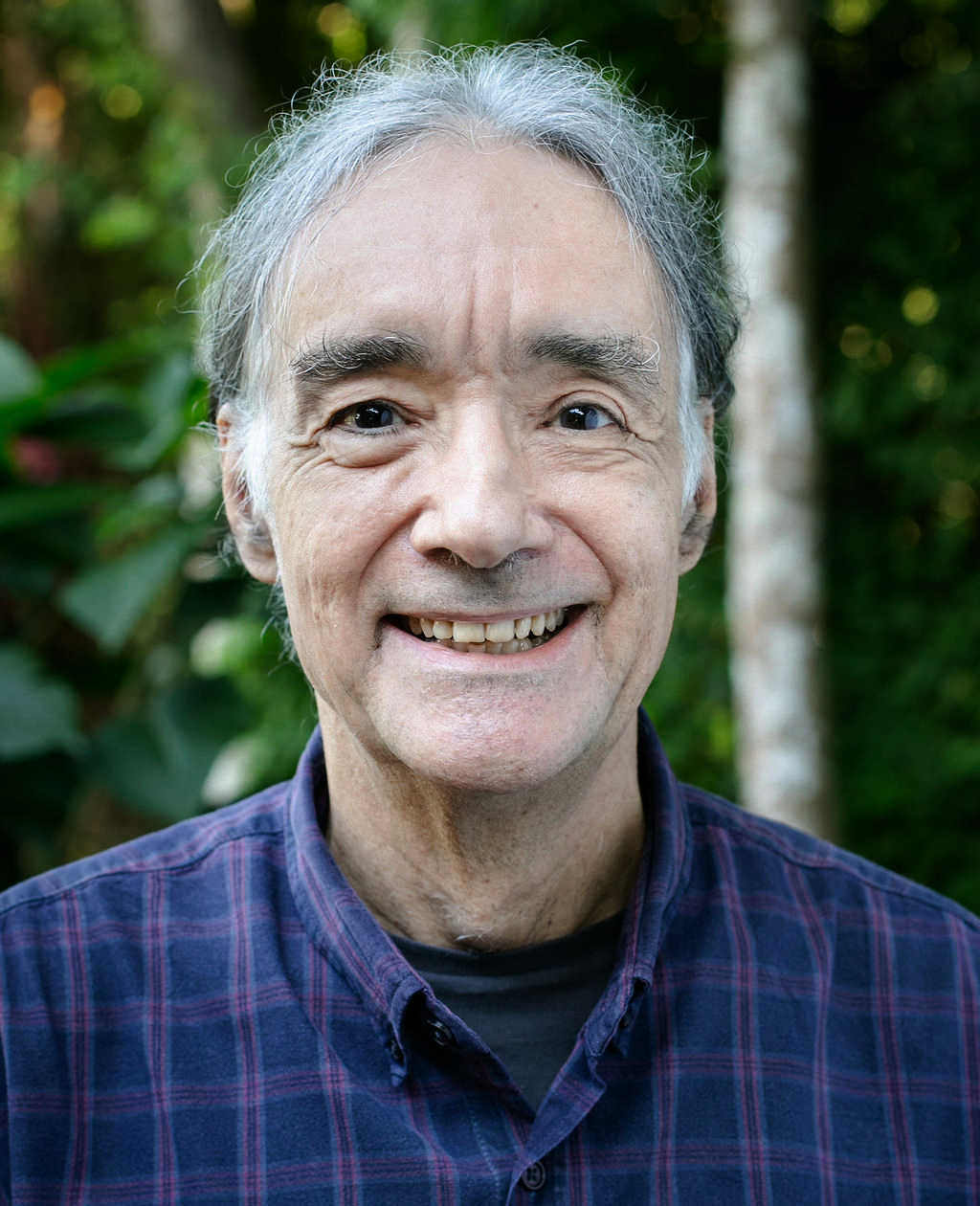
Dr.
Luiz Velho
Institute for Pure and Applied Mathematics (IMPA), Brazil
Website
Luiz Velho is a Scientist and a Creative Leader in Media Arts and Technologies. A pioneer in Computer Graphics, in 1978 he created the first computer-animated film in Brazil. He holds a PhD from the University of Toronto, an MSc from the MIT Media Lab, and a BA from ESDI. He is a senior researcher at IMPA and the head of the VISGRAF Laboratory. He has been a visiting researcher at the National Film Board, the Courant Institute of Mathematical Sciences, HP Imaging Research Lab, and Microsoft Research Asia. Among his many distinctions are the National Order of Scientific Merit; the Compaq Award for Computer Science; more than 33 award-winning technical papers; and 11 best video awards.
Accepted Papers
- Keynotes
- Cultural Heritage Media Projects of the Ancient Egypt - Luiz Velho
- Deep generative networks for image and video editing and restoration - Alasdair Newson
- Oral
- IconoBench: Can VLMs Understand Cultural Symbols and Iconography?
- Spalling segmentation on tuffeau limestone heritage facades using RGB–thermal fusion
- Experimenting with cross-modal retrieval for geolocalization of archival images with LiDAR data
- Supporting Digital Conservation with GenAI: An Expert Evaluation of a Provenance-Aware Workflow for Iterative Restoration Planning
- Poster
- ConServe: Clean-Only Multimodal Metadata Error Detection Under Museum and Error-Type Shift
- Content-Based Image Retrieval for Archaeological Microwear Analysis: Baselines and Benchmarks
- Recovering Missing Letters from Byzantine Monograms with Explainable Bayesian Inference
Program Committee
|
|
Organizers
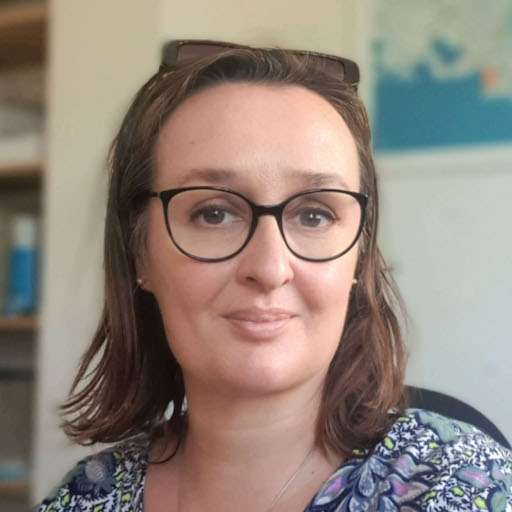
Valerie Gouet-Brunet
IGN, Gustave Eiffel University, France
Website
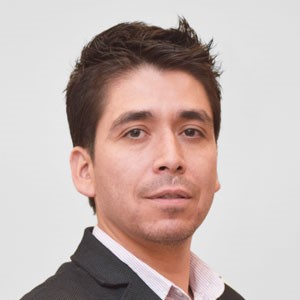
Edgar Roman-Rangel
ITAM, Mexico
Website
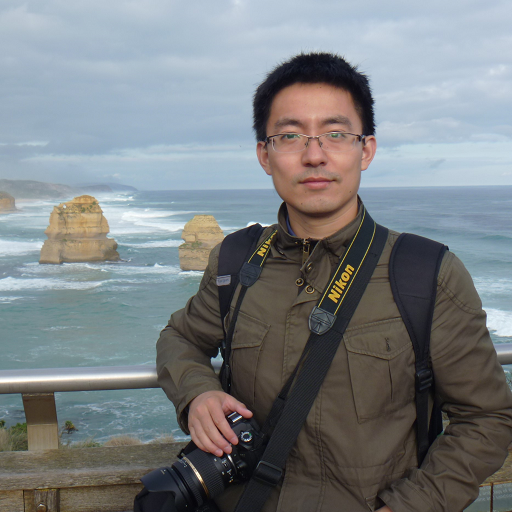
Li Weng
Zhejiang Financial College, China
Website
Sponsors




Previous Editions
- SUMAC 2025 Website & Proceedings
- SUMAC 2024 Website & Proceedings
- SUMAC 2023 Website & Proceedings
- SUMAC 2022 Website & Proceedings
- SUMAC 2021 Website & Proceedings
- SUMAC 2020 Website & Proceedings
- SUMAC 2019 Website & Proceedings